-fotor-bg-remover-20251211141935.webp)
-fotor-bg-remover-20251211143525.webp)
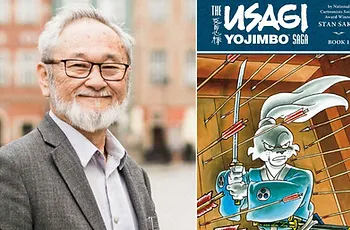
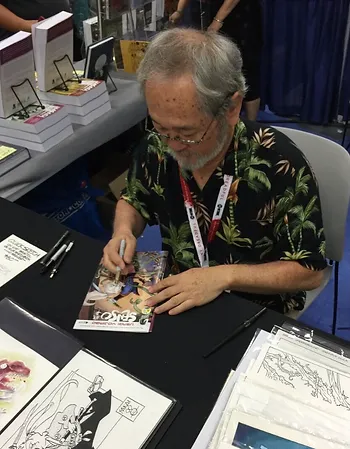
Stan Sakai was born on May 25, 1953, in Kyoto, Japan, but was raised in Honolulu, Hawaii. Growing up in a culturally rich environment, Sakai was deeply influenced by Japanese folklore, samurai tales, and the traditional code of Bushidō—the way of the warrior.
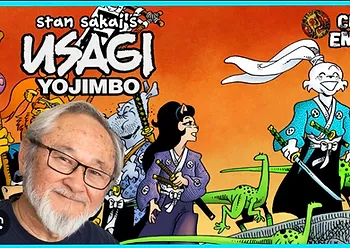
He also developed a love for American comics, cartoons, and storytelling, blending both Eastern and Western influences from an early age.
Sakai studied fine art and eventually earned a degree in illustration from the Art Center College of Design in Pasadena, California.
He got his professional start in the comic industry lettering for Sergio Aragonés on Groo the Wanderer, which gave him a strong foundation in comic book production. This experience also connected him with influential creators and taught him the nuts and bolts of visual storytelling, layout, and pacing.
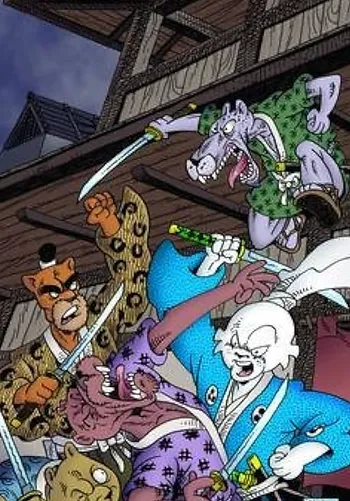
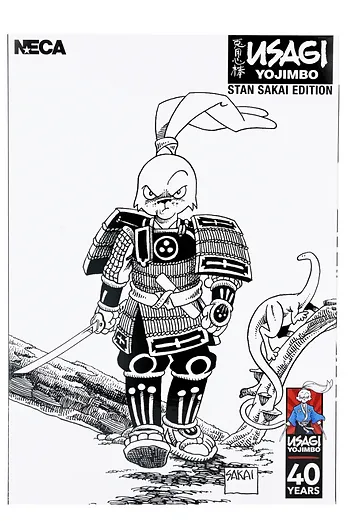
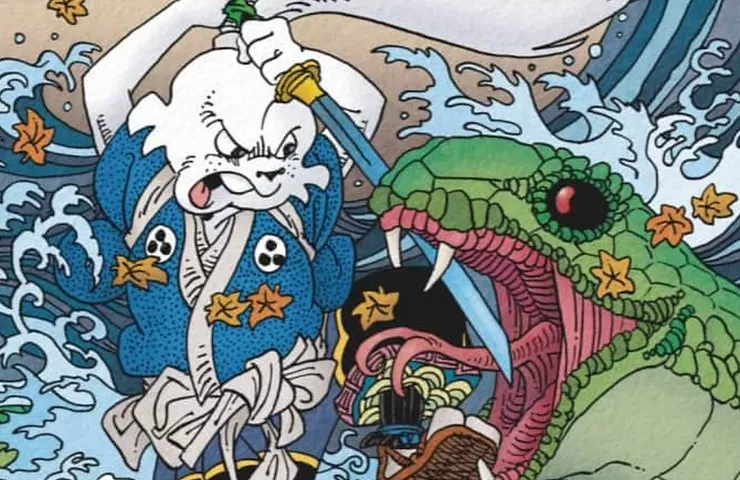
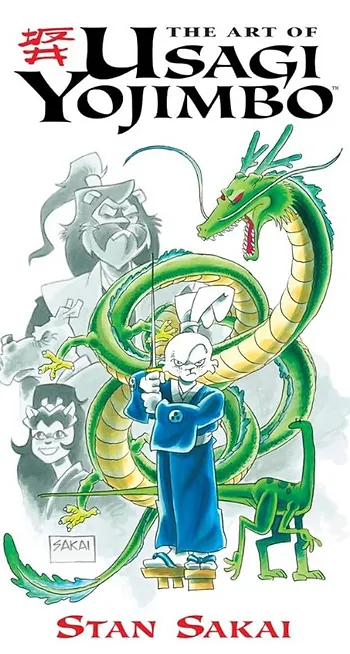
In 1984, inspired by Japanese history and the legendary swordsman Miyamoto Musashi, Sakai created Usagi Yojimbo, a long-eared ronin rabbit wandering a world of anthropomorphic animals.
Though it may have looked whimsical on the surface, Usagi Yojimbo was (and still is) deeply rooted in authentic Edo-period history, samurai philosophy, and Japanese culture.
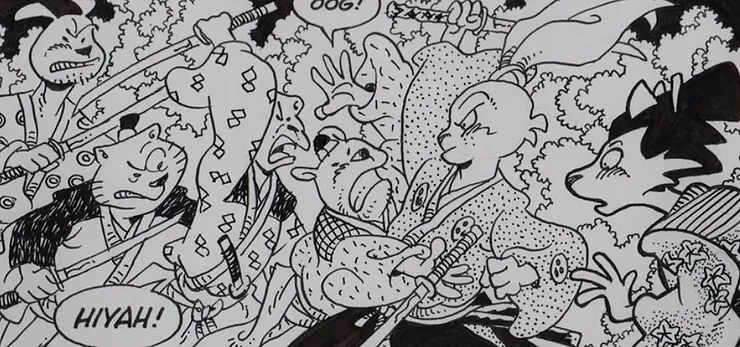
The character first appeared in a short story published in Albedo Anthropomorphics #2 (1984), a small indie comic published by Thoughts & Images. The story quietly started building a cult following due to its combination of sharp storytelling, cultural depth, action, and heartfelt emotional beats.
Usagi Yojimbo quickly stood out in the growing indie comic scene of the 1980s. Sakai’s unique mix of traditional Japanese storytelling and anthropomorphic characters caught the attention of both comic fans and professionals.
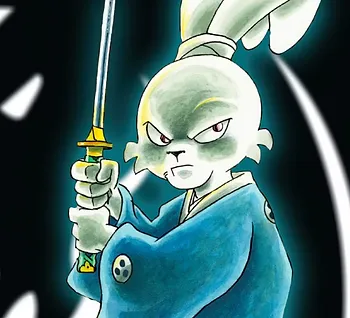
What especially impressed readers was Sakai’s ability to weave historical accuracy, rich character development, and accessible storytelling into a visually distinct style.
It wasn't long before Usagi Yojimbo was picked up for regular publication—first by Fantagraphics Books in 1987, then Mirage Publishing (of Teenage Mutant Ninja Turtles fame), and later Dark Horse Comics, which became its longest-running home.
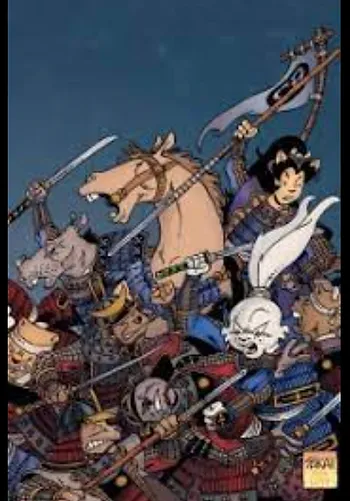
The comic became a critical success, earning awards, international translations, and even crossovers with the Teenage Mutant Ninja Turtles—a major pop culture moment that boosted its visibility in the '90s and helped establish Sakai as a legendary creator.
When Usagi Yojimbo first arrived in the mid-1980s, no one expected a black-and-white indie comic about a ronin rabbit to rise into the pantheon of pop culture legends. But what Stan Sakai created wasn’t just another comic—it was a bridge between traditional Japanese storytelling and the evolving landscape of global popular media.
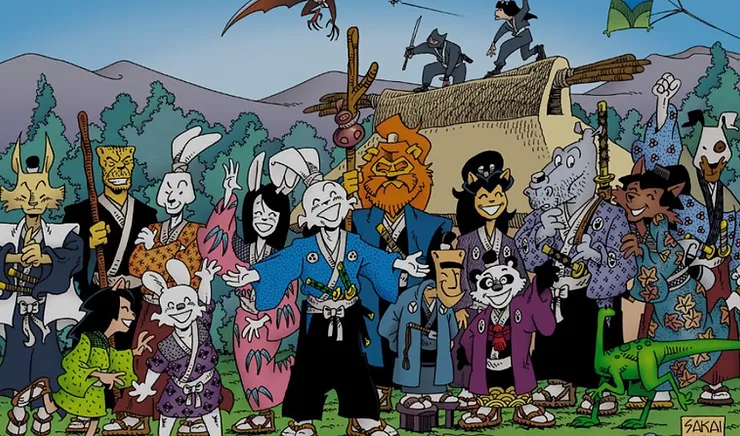
At the heart of Usagi Yojimbo is a profound respect for samurai philosophy, particularly the Bushidō code: honor, duty, humility, and perseverance.
Stan based the titular character, Miyamoto Usagi, on the legendary swordsman Miyamoto Musashi—a figure of mythic skill and moral complexity in Japanese history.
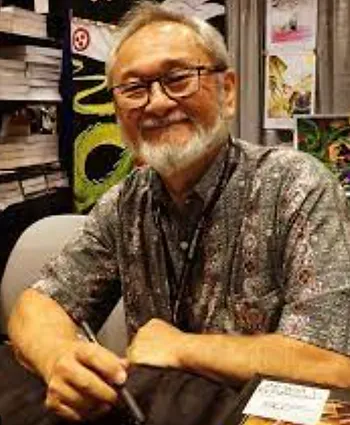
Rather than portray action for action’s sake, Sakai crafted stories where every duel carried emotional weight, every choice reflected internal conflict, and every victory came with consequence. The comic became a way to preserve the moral and spiritual essence of the samurai era, while subtly commenting on modern life through allegory.
Born in Kyoto, Japan and raised in Hawaii, Stan Sakai had a rare perspective. He was immersed in traditional Japanese culture from birth—steeped in folktales, history, and classic martial arts cinema—while also growing up with Western media and storytelling frameworks.
This dual identity allowed him to:
Sakai’s attention to detail extended even to architecture, weapons, clothing, and dialects, earning praise from historians and educators. Usagi Yojimbo became more than entertainment—it became an educational gateway to Japanese culture for an international audience.
Over time, Usagi Yojimbo built a loyal following. It had:
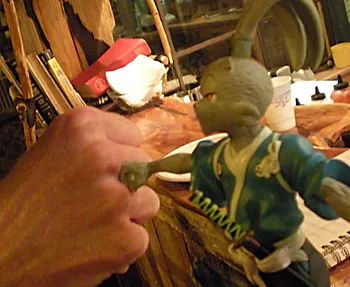
Then came the crossover with Teenage Mutant Ninja Turtles—which skyrocketed Usagi into broader public consciousness. Miyamoto Usagi became a recurring character in TMNT shows, toys, and video games, cementing his status as a pop culture figure alongside the heroes in a half-shell.
Suddenly, this quiet samurai rabbit was known by kids, collectors, and pop media fans across generations.
What makes Usagi Yojimbo endure is its timeless core. In 2022, Netflix premiered Samurai Rabbit: The Usagi Chronicles—a CG-animated series introducing Usagi’s world to a new generation.
Though futuristic in style, the show was still rooted in the legacy that Stan had built: one of honor, family, and cultural memory.
Stan’s son, Sam Sakai, stepped into the spotlight during this era—helping to carry the torch as Usagi Yojimbo expanded into digital media, merchandising, and future adaptations.
Through Sam, the Sakai legacy continues, ensuring the spirit of Usagi evolves without losing its roots.
Usagi Yojimbo didn’t just become pop culture—it redefined what pop culture could mean.It proved that:
For POPOLOGISTS, Usagi Yojimbo is a shining example of intentional storytelling, creator sovereignty, and the power of myth to inform a media-literate world.
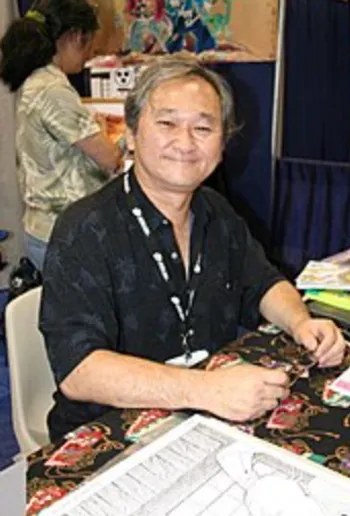
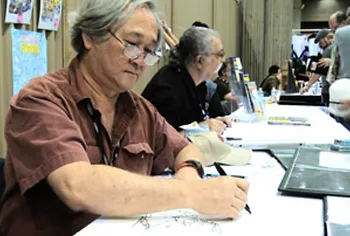
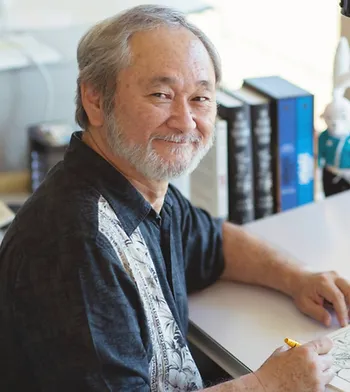
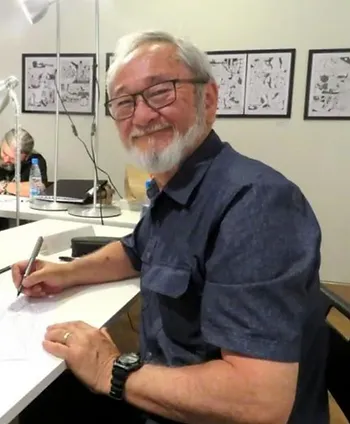
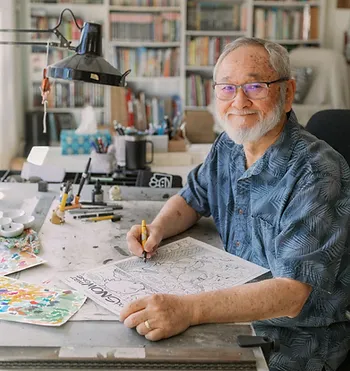
Stan Sakai has written, drawn, inked, and even lettered almost every single issue of Usagi Yojimbo since it debuted in 1984.
That level of creative consistency is nearly unheard of in comics, and it’s allowed the series to grow without the interruptions or tone shifts that often come with multiple writers or artists.
The result? A deeply coherent world that readers can rely on to feel grounded, authentic, and meaningful.
Rather than adapting Japanese folklore and samurai culture to fit Western norms, Sakai honored the source.
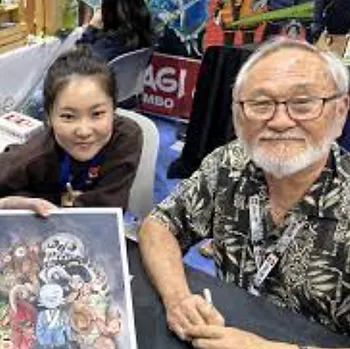
He infused his storytelling with:
This respect for tradition gave the series a unique educational power while still being entertaining—making it both timeless and universal.
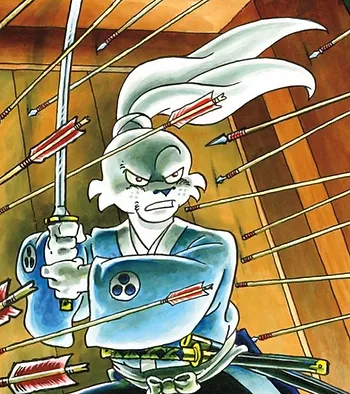
In contrast to the gritty anti-heroes that dominated '80s and '90s comics, Miyamoto Usagi is noble, disciplined, kind, and loyal.
He doesn’t need a dark past or flashy powers to be compelling.
His strength comes from his character—his choices, compassion, and willingness to walk alone when needed.
That sort of quiet integrity has aged beautifully, especially in an era where authenticity is more valued than ever.
Yes, the characters are animals—but Usagi Yojimbo doesn’t lean into slapstick or parody. The use of anthropomorphic animals:
This approach made the series ageless—able to resonate with kids, teens, and adults alike.
While the series is rooted in samurai cinema and historical fiction, it constantly blends genres:
You never know if you’ll get a ghost story, a heartfelt friendship tale, or a complex moral conflict in the next issue. That flexibility keeps the series fresh and unpredictable without ever feeling disjointed.
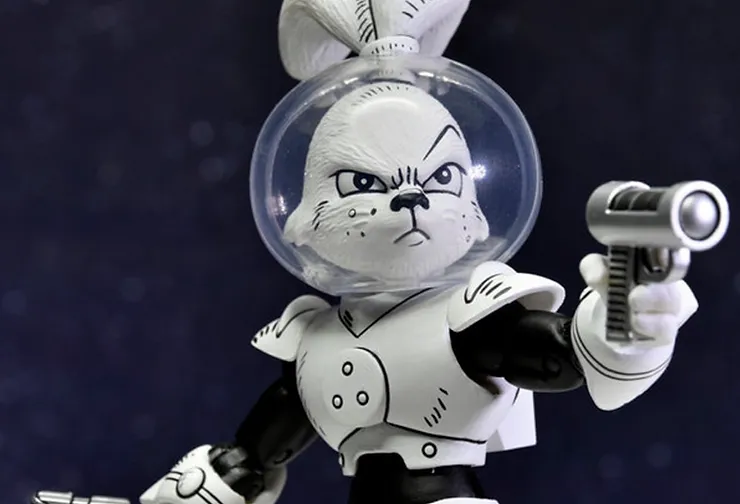
The Usagi Yojimbo x Teenage Mutant Ninja Turtles crossover is a masterclass in how to go mainstream without losing your soul. It introduced Usagi to global audiences via toys, TV shows, and cartoons—but Stan never sacrificed the tone or dignity of the comic to chase trends.
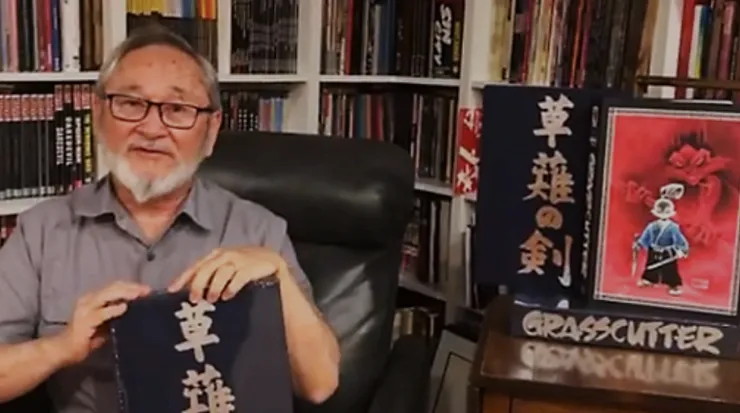
He let the character expand organically, preserving the heart of the story while adapting its form for new generations.
Underneath the action, Usagi Yojimbo is deeply reflective—about war, loss, identity, family, and the burden of carrying one’s principles through a chaotic world.
It asks big questions subtly. It doesn’t shout. And that quiet power is what’s kept it relevant across decades of cultural change.
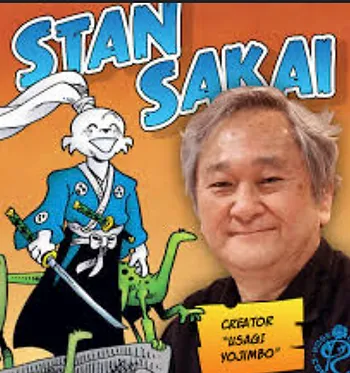
Usagi Yojimbo, born in 1984 from the ink of Stan Sakai’s brush, started as a quiet powerhouse in the world of independent comics. A black-and-white book about a ronin rabbit set in Edo-period Japan, it didn’t chase trends—it set its own rhythm.
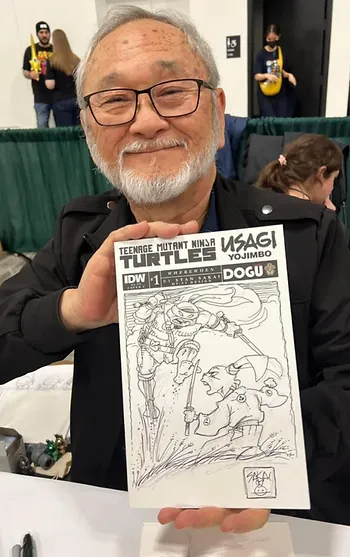
But the world began to notice. Slowly, steadily, this humble title became a beloved cornerstone in the industry. Over the years, the character of Miyamoto Usagi leapt off the comic book page and into other forms of media, sparking a global following and generations of fans.
One of the earliest and most impactful expansions came through TMNT. The crossover was a cultural moment.
This balance—of mainstream exposure and authentic storytelling—became the template for Usagi’s expansion.
In 2022, Netflix premiered Samurai Rabbit: The Usagi Chronicles, a CG-animated series inspired by Sakai’s world. It didn’t follow Miyamoto Usagi himself, but rather his descendant Yuichi Usagi, in a futuristic take on the original mythos.
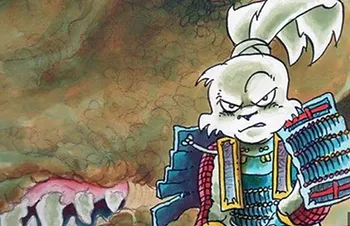
While it took liberties, the series:
Stan Sakai remained deeply involved as an executive producer, ensuring the series remained connected to its roots.
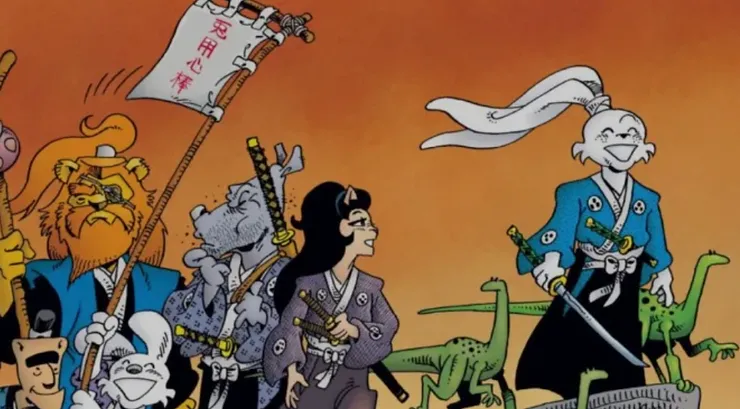
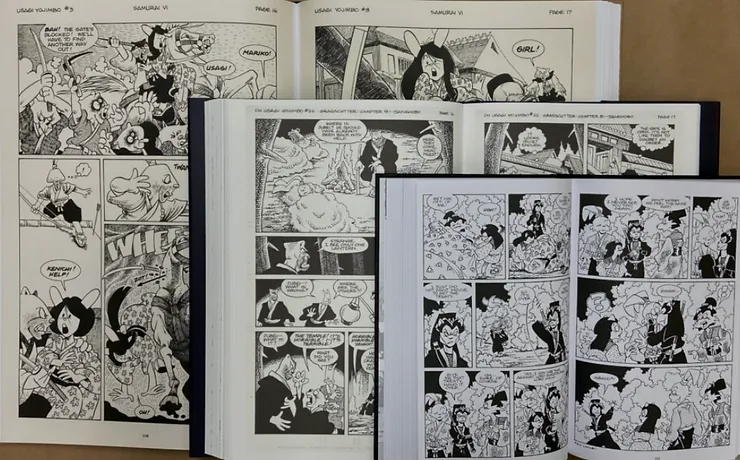
In the mid-2020s, the Usagi Yojimbo comics themselves saw a resurgence:
As of 2025, Usagi Yojimbo continues to expand and inspire:
There’s buzz around a potential animated feature film in development (unconfirmed release date), possibly returning to the original Miyamoto Usagi timeline. It’s said to be visually traditional—evoking brushwork aesthetics, sumi-e, and watercolors—and could be produced in Japan in collaboration with Western studios.
Sakai has partnered with select curators and fans to release limited edition figures, prints, and possibly digital collectibles, all done tastefully and ethically. These projects celebrate Usagi’s legacy without turning it into a mass-market product line.
Stan’s son Sam Sakai is increasingly involved in the creative direction. With deep reverence for his father’s work and a background in visual storytelling, Sam represents the next evolution of the Usagi universe—keeping its roots in heritage while exploring new formats like VR storytelling, AR samurai exhibits, and interactive storybooks.
In 2025, Usagi Yojimbo is studied in university courses on visual storytelling, Japanese history, and transnational comics. Scholars cite the series as an example of how authentic representation can succeed without cultural dilution.
Usagi Yojimbo has never chased hype—it’s walked its own path, just like the ronin who stars in its pages. And now, in 2025, that path continues forward, inspiring artists, creators, educators, and fans across the globe.
It is more than a comic.It is a living scroll of honor, art, and cultural fusion.
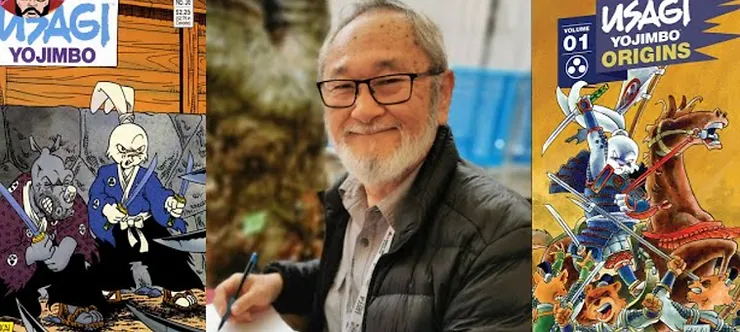
Since its debut in 1984, Usagi Yojimbo—the creation of cartoonist Stan Sakai—has quietly built one of the most enduring legacies in indie comics. Set in a richly researched Edo-period Japan and starring a samurai rabbit named Miyamoto Usagi, the series blended history, folklore, and moral clarity in a way that made it timeless.
What began as a black-and-white indie comic gradually transformed into a pop culture touchstone, with deep respect from the comic industry and a loyal global fanbase.
Usagi's early leap into wider recognition came through his crossover appearances with the Teenage Mutant Ninja Turtles, starting in the late '80s. He featured in:
This exposure introduced Usagi to a much broader audience, especially younger fans, helping solidify his presence in pop culture while maintaining Sakai’s artistic integrity.
In 2022, Netflix released Samurai Rabbit: The Usagi Chronicles, a CG-animated series loosely based on the original comic. Rather than retell Miyamoto Usagi’s story, it focused on his descendant, Yuichi Usagi, in a futuristic setting.
While stylistically different and aimed at a younger audience, the series:
Stan Sakai served as executive producer, ensuring the adaptation remained connected to his vision.
The comic itself continues strong in 2025. In recent years:
Sakai remains deeply involved, still writing and illustrating every issue with meticulous detail, even after four decades.
As of now, Usagi Yojimbo remains:
A collector’s favorite, with new editions, statues, and merchandise still being released in small batches
Sakai continues to focus solely on creating new Usagi Yojimbo content, maintaining its unique balance of traditional storytelling, clean cartooning, and deep research.
Usagi Yojimbo’s staying power comes down to:
In a rapidly changing entertainment landscape, Usagi Yojimbo stands tall by never compromising its identity.
Stan Sakai’s Inspirations: Stan Sakai was deeply inspired by Japanese culture, especially samurai lore and folklore.
He drew on the historical tales of samurai and bushido, as well as classic Manga like Osamu Tezuka's work and Katsuhiro Otomo's Akira. He also took inspiration from Western comics like Walt Kelly’s Pogo, which combined humor and social commentary with animal characters.
How Stan Inspires Today: Today, Sakai’s influence extends far beyond comics:
Connection to Matsu: Sakai's work on Usagi Yojimbo has influenced Matsu in several ways:
__________________________________________________________________________________
MORE ABOUT MATSU
__________________________________________________________________________________
__________________________________________________________________________________
MORE ABOUT MATSU
__________________________________________________________________________________
*Sakai's focus on combining deep cultural roots with captivating storytelling acts as a blueprint for narratives like Matsu, offering inspiration to blend mythology with modern struggles and timeless values.
__________________________________________________________________________________
MORE ABOUT MATSU
__________________________________________________________________________________
Stan Sakai’s legacy is vast and profound in the world of comics. His creation, Usagi Yojimbo, isn’t just a beloved series—it’s a testament to his dedication to storytelling, cultural preservation, and artistic integrity.
The future of Usagi Yojimbo looks vibrant and filled with new possibilities:
In short, Usagi Yojimbo’s legacy is a timeless one, and its future looks secure as it continues to expand in ways Sakai may not have fully envisioned at its inception, but undoubtedly feels proud of.
The heart of the story—its wisdom, art, and narrative depth—remains steadfast, offering a lasting impact for generations to come.
-fotor-bg-remover-20251210165637.webp)


