-fotor-bg-remover-20251211141935.webp)
-fotor-bg-remover-20251211143525.webp)
Before he was the rugged cowboy of Yellowstone, before he danced with wolves, and before he stood tall in the baseball diamond of Field of Dreams, Kevin Costner was just a kid with a dream, growing up in California.
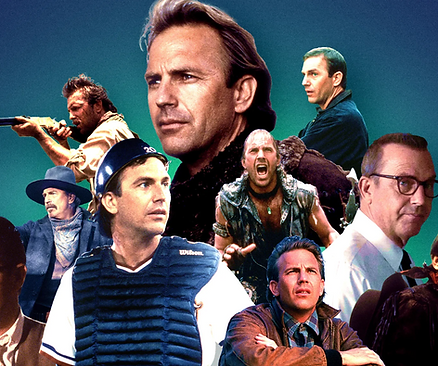
Born on January 18, 1955, in Lynwood, California, and raised in Compton, Costner was the youngest of three boys in a blue-collar family. His father, William, was an electrician who worked for Southern California Edison, while his mother, Sharon, was a welfare worker.
Though the family frequently moved due to his father’s job, young Kevin found solace in two things: storytelling and adventure.
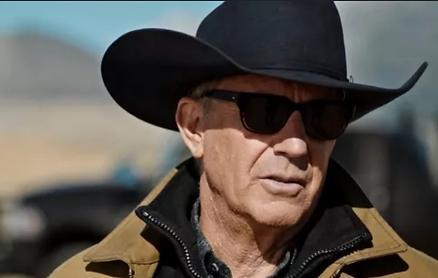
Despite his love for movies, Costner wasn’t immediately set on becoming an actor. He was more interested in sports, music, and history, excelling in baseball, writing poetry, and even singing in a Baptist church choir.
But his world shifted when, as a teenager, he discovered the magic of cinema. The larger-than-life figures on the screen inspired him, planting a seed that would later define his career.
Costner attended California State University, Fullerton, majoring in business and marketing—a practical choice, but not his passion. Everything changed in his final year of college when he took an acting class. Suddenly, he felt something he hadn’t before: a sense of purpose.
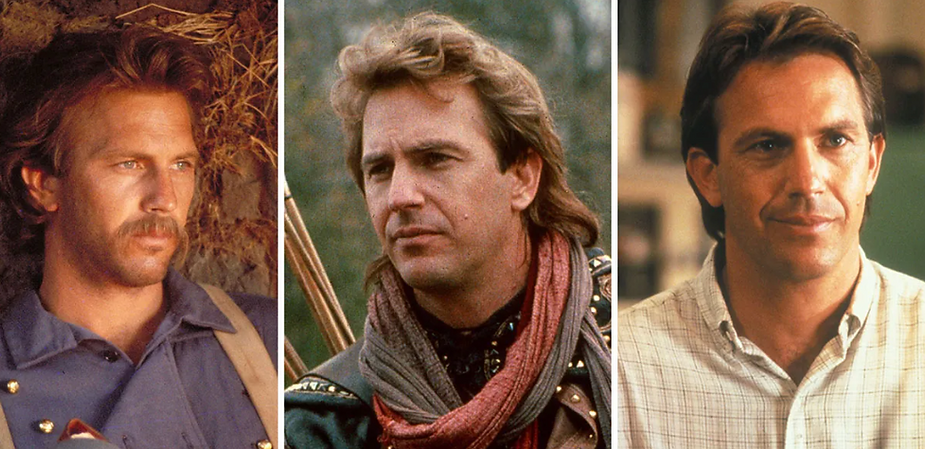
That realization came with a heavy cost. Shortly after marrying Cindy Silva, his college sweetheart, in 1978, Costner made a bold decision—he would pursue acting full-time.
But Hollywood wouldn’t just open its arms for an unknown young man with no connections. Instead, Costner had to grind his way up. He worked odd jobs to make ends meet, from truck driving to giving tours at Disneyland, even working on a commercial fishing boat.
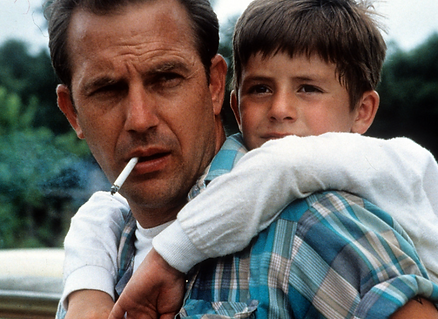
His break didn’t come immediately. For years, he landed small, non-speaking roles and even had scenes cut from major films.
His first credited role came in a low-budget softcore romance film, Sizzle Beach, U.S.A. (filmed in 1978 but released in 1981), which Costner would later try to distance himself from. Hollywood was proving to be a brutal, unforgiving place.
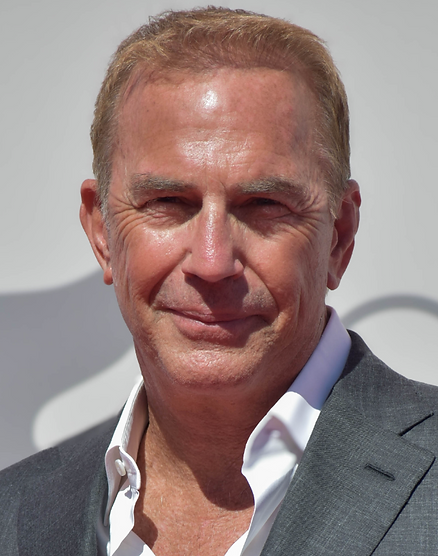
In 1983, Costner landed what seemed like his big break—a role in Lawrence Kasdan’s film The Big Chill.
He played Alex, the dead friend whose suicide brings a group of college friends back together. There was just one problem: all of his scenes were cut before the film’s release.

It was a crushing blow. But Kasdan saw something in Costner. He told him, “Don’t worry, I won’t forget you.” That promise would later change everything.
True to his word, Lawrence Kasdan came back with a new film in 1985—Silverado, a Western about a group of misfits fighting for justice. This time, Costner was given a real shot.
His role as Jake, a young, fast-drawing cowboy, showcased his charisma, energy, and effortless screen presence.
Audiences and critics took notice. Costner wasn’t just another struggling actor anymore—he was on the brink of stardom. His boyish charm, rugged good looks, and natural confidence made him Hollywood’s next leading man in the making.
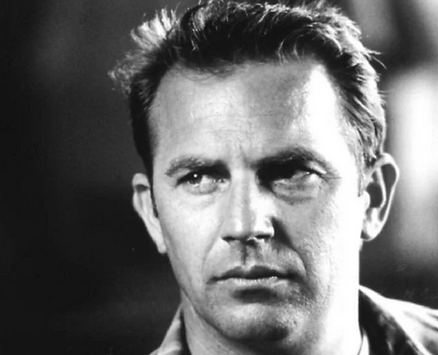
With Silverado, Costner had officially arrived. The years of odd jobs, rejections, and cut scenes were behind him. What lay ahead was a string of roles that would define a legendary career—including baseball classics, crime dramas, and an Oscar-winning epic that would forever change the Western genre.
By the mid-1980s, Kevin Costner had spent nearly a decade struggling to break into Hollywood. He had faced rejection, worked odd jobs, and even endured the heartbreak of seeing his scenes cut from The Big Chill (1983).
But when director Lawrence Kasdan kept his promise and cast him in the rollicking Western Silverado (1985), Costner finally had his moment.

Playing Jake, a wild, cocky gunslinger, Costner stood out in an ensemble cast that included Kevin Kline, Danny Glover, and Scott Glenn. His energy, charisma, and rugged charm made audiences take notice. Silverado was not a massive box office hit, but it was enough to put Costner on Hollywood’s radar. He wasn’t just another young actor anymore—he was a star in the making.
After Silverado, Costner’s career picked up momentum. His next defining moment came in 1987 when he starred in the gritty neo-noir crime drama No Way Out, opposite Gene Hackman and Sean Young. The film was a critical and commercial success, proving that Costner could handle more complex, dramatic roles. His intensity and screen presence made him a leading man worth watching.
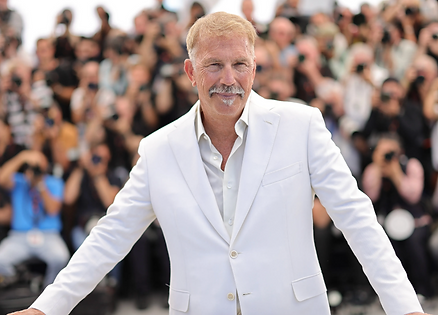
Then came a pair of baseball films that would cement his reputation as an all-American movie star:
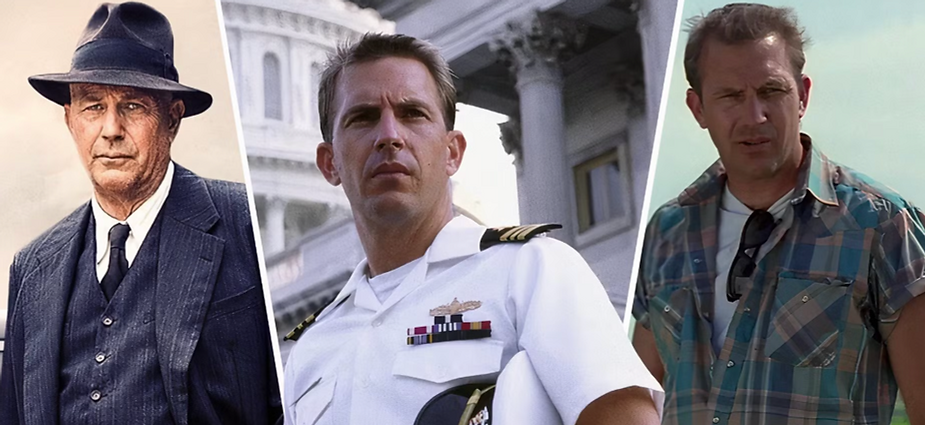
If Bull Durham made Costner a household name, Field of Dreams (1989) made him a legend.
Playing Ray Kinsella, an Iowa farmer who hears the famous words, "If you build it, he will come," Costner delivered one of the most emotionally powerful performances of his career. The film’s blend of fantasy, nostalgia, and baseball struck a deep chord with audiences, turning it into one of the most beloved films of all time.
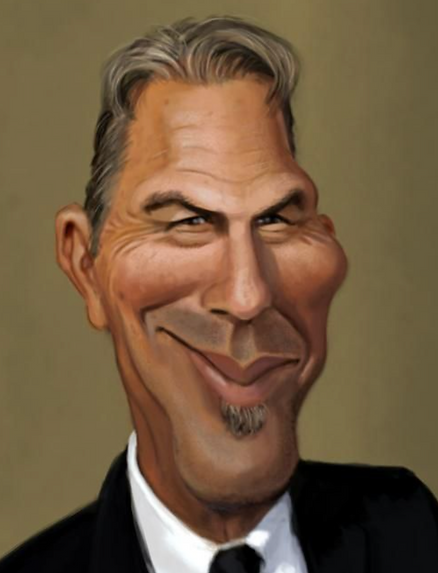
Field of Dreams wasn’t just a success—it was a cultural phenomenon. It solidified Costner as the ultimate leading man of the late ‘80s, someone who could carry a film with both substance and star power.
The story of Field of Dreams began with a book—W.P. Kinsella’s 1982 novel Shoeless Joe. The novel told the tale of a man who hears a mysterious voice telling him, "If you build it, he will come." This simple yet profound phrase sets him on a journey that blends baseball, magic, and redemption.
When Hollywood producers first considered adapting the book into a film, they faced a problem: It was too sentimental and unconventional. Studios weren’t sure if a blend of baseball, nostalgia, and the supernatural would work. But one man believed in the story from the start—Phil Alden Robinson, a young filmmaker who had fallen in love with the book.
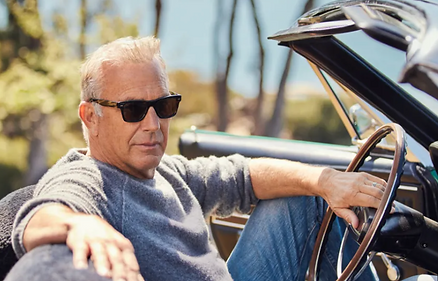
Robinson wrote a screenplay that captured the novel’s heart but streamlined the story, focusing more on family, lost dreams, and second chances. When the script was completed, the next challenge was finding someone to bring it to life.
At the time, Kevin Costner was on the rise in Hollywood, with The Untouchables and Bull Durham making him a household name. When Robinson and producers approached him for the lead role of Ray Kinsella, they feared he would decline—it was another baseball movie, and he had just finished Bull Durham.
But Costner wasn’t just an actor—he was a storyteller with a deep love for baseball. He saw something in the script that transcended sports. It wasn’t about baseball—it was about believing in the impossible, following your heart, and reconnecting with lost loved ones.
Without Costner’s star power, the film might not have been made, but with him on board, the project gained momentum.
The most iconic part of the film—the baseball field in the cornfield—had to be just right. Producers scouted locations across the Midwest before choosing Dyersville, Iowa, where they found the perfect farm with rolling cornfields and a natural sense of magic.
Transforming the field wasn’t easy. The filmmakers had to:
Little did they know that this field would become a permanent piece of American cinema history.
With Costner leading the film, Robinson assembled a powerful supporting cast:
The cast’s chemistry helped create a sense of realism and emotional depth, making the film more than just a sports story.
Despite its magical story, filming Field of Dreams was filled with challenges:
Through all of this, Robinson and Costner stayed committed to keeping the film’s heart intact.
When production wrapped, Field of Dreams still had one major hurdle—marketing it to audiences.
The film wasn’t easily categorized:
The title itself changed multiple times before they settled on Field of Dreams.
The studio wasn’t sure if it would succeed. Would audiences connect with a film about ghosts, baseball, and redemption?
Field of Dreams premiered in April 1989, and something incredible happened:
Audiences did come.
Despite its unconventional plot, the film became a critical and commercial success, grossing over $84 million worldwide on a modest budget.
But beyond the box office, it became a film that touched people’s hearts.
Field of Dreams was nominated for three Academy Awards, including Best Picture, and cemented its place in cinematic history.
Decades later, the Field of Dreams still exists in Dyersville, Iowa, where thousands of fans visit every year.
Field of Dreams wasn’t just a movie—it was a testament to the power of storytelling, faith, and never giving up on what you love.
And as long as baseball is played, as long as fathers and sons share a game of catch, and as long as people believe in magic, Field of Dreams will continue to whisper in the hearts of dreamers everywhere:
“If you build it, he will come.”
As the 1980s came to a close, Costner had transformed from a struggling actor into one of Hollywood’s biggest stars. He had proven his range—whether it was playing a heroic lawman, a cocky baseball player, or a sentimental dreamer.
But the biggest moment of his career was still ahead. The 1990s would bring his directorial debut, Academy Award glory, and even greater box office dominance. The world was about to witness Kevin Costner at his peak.
By 1990, Kevin Costner had built a solid career as a leading man, but he was about to take the biggest gamble of his life—his directorial debut. Against the advice of Hollywood insiders, he decided to direct and star in a Western epic, Dances with Wolves, based on Michael Blake’s novel.
The film was a monumental risk. At over three hours long, partially spoken in Lakota Sioux, and with a production budget that ballooned to $22 million, many believed it would fail. Studios were hesitant—Westerns had fallen out of favor, and Costner was unproven as a director.
But Costner believed in the story. He fought for its authenticity, shot on breathtaking South Dakota landscapes, and poured his heart into the role of Lieutenant John Dunbar, a Union soldier who finds himself immersed in Lakota culture.
When Dances with Wolves premiered, it wasn’t just a hit—it was a cinematic masterpiece. The film grossed $424 million worldwide and won seven Academy Awards, including Best Picture and Best Director for Costner. He had defied Hollywood expectations, proving that passion and storytelling could triumph over industry skepticism.
With this victory, Costner wasn’t just a movie star anymore—he was a Hollywood powerhouse.
The story of Dances with Wolves didn’t begin in Hollywood. It started with a struggling writer, Michael Blake, and an ambitious young actor, Kevin Costner, long before either of them had real power in the film industry.
Blake, a former screenwriter who had faced numerous rejections, had a passion for the American West and its untold stories. In the early 1980s, he wrote a screenplay about a Union soldier who finds himself living among the Lakota Sioux.
He pitched it around Hollywood, but no one was interested. Westerns were considered box office poison, and studios had little faith in a project that focused on Native American culture rather than the usual cowboy-vs-Indian tropes.
Frustrated but determined, Costner—who had read an early version of the script—encouraged Blake to turn it into a novel first. He believed in the story and told Blake, “If you write it, I’ll make sure it gets turned into a movie.”
Blake spent months living out of his car, working tirelessly on the novel. When it was finally published in 1988, it received modest attention—but one person was ready to bring it to life. Kevin Costner kept his promise.
By the late 1980s, Costner was rising in Hollywood, with hits like The Untouchables and Bull Durham under his belt. But when he tried to get Dances with Wolves financed, every major studio rejected it.
Their reasons?
Costner refused to give up. He mortgaged his own home, invested $3 million of his own money, and took on the project himself. Instead of using a big studio, he partnered with independent producers and distributors.
As he stepped into the role of director and lead actor, he was risking everything. If the film failed, it wouldn’t just be a financial loss—it could destroy his career.
Production began in 1989 in South Dakota, with locations near the real Fort Hays and Badlands National Park. Costner was determined to make the film as authentic as possible, which led to major challenges:
Buffalo Hunt Chaos:
The now-famous buffalo hunting scene was one of the most difficult sequences ever filmed.
Costner and his team used a mix of real trained buffalo, animatronics, and CGI (a rare technique at the time).
The most famous shot—a buffalo charging at the camera—was real. A rancher trained the buffalo to charge on command using a truck with food on the back.
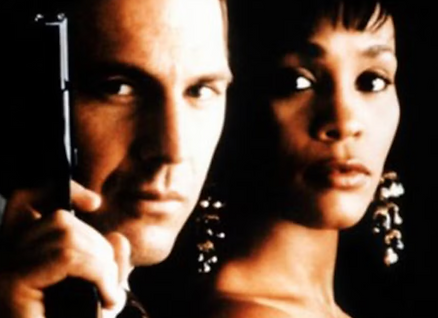
The origins of The Bodyguard go back decades before its 1992 release. In the 1970s, screenwriter Lawrence Kasdan—who later became famous for writing Raiders of the Lost Ark and The Empire Strikes Back—wrote a screenplay about a tough, no-nonsense bodyguard who falls in love with his high-profile client.
Kasdan envisioned it as a romantic thriller, filled with tension, action, and deep emotion. But when he first shopped the script around Hollywood, nobody wanted it.
Why?
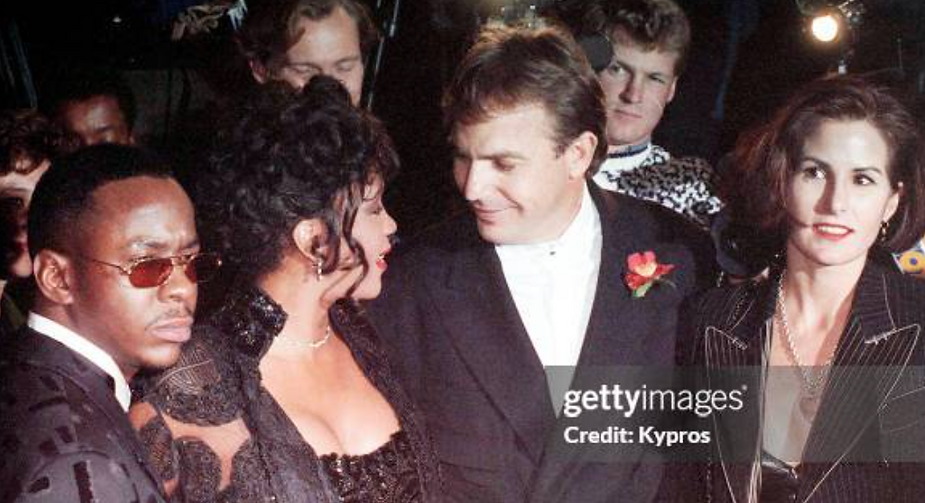
At one point, the film was set to star Steve McQueen and Diana Ross, but the project never got off the ground due to creative and scheduling conflicts.
For 16 years, The Bodyguard remained trapped in Hollywood limbo, waiting for the right stars to bring it to life.
By the late 1980s, Kevin Costner was Hollywood’s golden boy, fresh off blockbusters like The Untouchables, Bull Durham, and Dances with Wolves (which won Best Picture and Best Director at the Oscars).
Costner had the power to greenlight projects, and he had always loved Kasdan’s script. He believed the story could work—but only if the right woman played the lead role.
His choice? Whitney Houston.
At the time, Houston was a music icon but had never acted. She had conquered the pop charts with hits like Greatest Love of All and I Wanna Dance with Somebody, but stepping into Hollywood was a new and risky challenge.
When Costner personally approached her about the film, Houston was hesitant. Acting was a different world, and she knew that the industry wasn’t always welcoming to singers-turned-actresses.
But Costner believed in her and fought for her to be cast.
He convinced Warner Bros. to take the chance, knowing she would bring both vocal power and emotional depth to the role of Rachel Marron.
Houston finally said yes—but neither of them realized just how difficult the journey ahead would be.
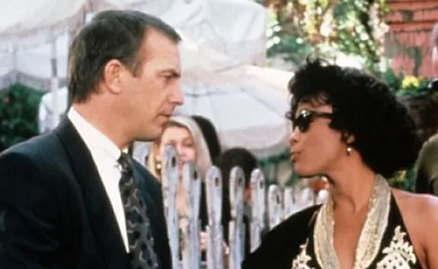
Filming began in 1991, and from the start, there were challenges.
Whitney Houston’s Inexperience in Acting
Houston struggled with some of the technical aspects of acting, like hitting marks and delivering lines naturally.
Costner, as both her co-star and one of the film’s producers, took her under his wing and mentored her throughout the shoot.
Racial Controversy
At the time, Hollywood was still hesitant about interracial romances on-screen.
Some studio executives worried about how audiences would react to a Black woman and a white man in a love story.
Costner refused to compromise, stating, “Whitney is the perfect choice, and I won’t do this film with anyone else.”
Houston’s Exhaustion
Balancing filming with her demanding music career was physically and emotionally draining.
She had to juggle intense film scenes with recording sessions for the soundtrack, which would later become legendary.
A Rocky Relationship Between the Leads
Though they respected each other, Costner and Houston had different approaches to their work.
Costner was a perfectionist, while Houston often struggled with self-doubt.
Despite moments of tension, they formed a deep friendship, with Costner becoming one of Houston’s biggest supporters.
The Iconic “I Will Always Love You” Almost Didn’t Happen
The film originally planned to use "What Becomes of the Brokenhearted" as Rachel Marron’s big song.
But when another film used the song first, they needed a replacement.
Costner suggested Dolly Parton’s "I Will Always Love You."
At first, Houston wasn’t sure about it. But when she recorded her acapella intro, everyone knew it was something special.
When The Bodyguard premiered in November 1992, expectations were mixed. Some critics dismissed it as a formulaic romance, while others praised Houston’s natural screen presence and the film’s emotional depth.
But audiences fell in love with it.
The Bodyguard soundtrack became a cultural phenomenon, selling over 45 million copies worldwide. It remains:
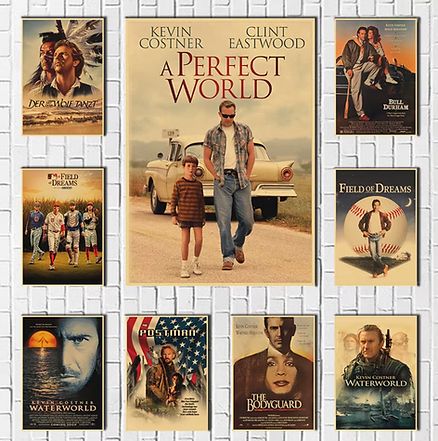
The film cemented Whitney Houston as a Hollywood legend and further solidified Kevin Costner’s status as a box-office powerhouse.
Even decades later, The Bodyguard continues to hold a special place in pop culture.
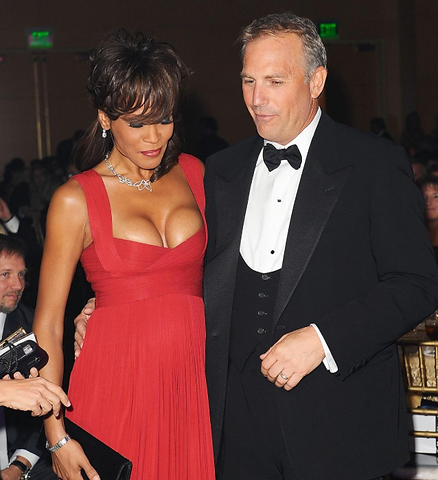
In the years since, attempts have been made to remake The Bodyguard, but no version has ever captured the magic, chemistry, and power of the original.
The film remains a testament to believing in a vision, fighting for representation, and taking risks in storytelling.
And as long as that unforgettable voice echoes through time, The Bodyguard will continue to be remembered as one of Hollywood’s greatest love stories—both on and off the screen.
At this point, Costner was unstoppable. He had mastered Westerns, thrillers, romance, and action. Everything he touched turned to gold.
By the mid-1990s, Costner’s success was undeniable, but his ambition sometimes outpaced reality. Two of his biggest projects, Waterworld (1995) and The Postman (1997), became cautionary tales in Hollywood.
In the late 1980s, Hollywood was hungry for big, high-concept blockbusters, and the idea of a post-apocalyptic world covered in water seemed like a goldmine of adventure and spectacle. The concept for Waterworld first surfaced in 1986, when screenwriter Peter Rader envisioned a futuristic story inspired by Mad Max—but instead of the desert, the entire world was an endless ocean.
At first, no major studio wanted it. The idea seemed too expensive and too risky. Even when Rader’s script was rewritten by David Twohy (who later wrote Pitch Black), the project stalled.
Then came Kevin Costner.
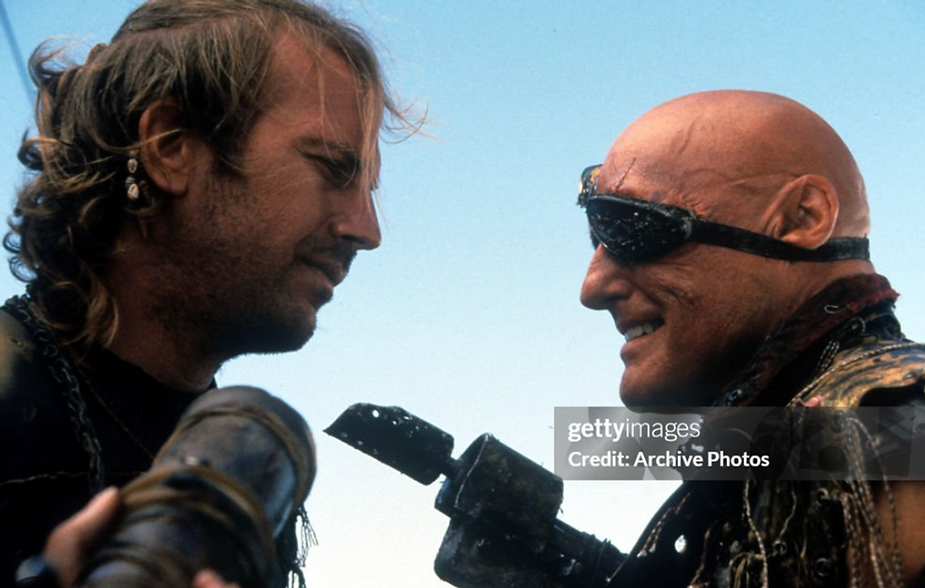
By the early 1990s, Costner was at the height of his power. Fresh off the Oscar-winning success of Dances with Wolves and the blockbuster appeal of Robin Hood: Prince of Thieves, Costner had the industry at his feet. When Universal Pictures greenlit Waterworld in 1992, Costner agreed to both star in and produce the film—but he had one demand: his close friend Kevin Reynolds had to direct it.
Costner and Reynolds had already worked together on Robin Hood: Prince of Thieves, but their working relationship had been rocky. Still, they reunited for Waterworld—unaware that the film’s production would become one of the most disastrous in Hollywood history.
From the start, Waterworld was wildly ambitious.
Originally budgeted at $100 million, costs spiraled out of control. By the time filming wrapped, the budget had ballooned to $175 million—making Waterworld the most expensive film ever made at that time.
Filming took place off the coast of Hawaii, and from day one, the ocean proved to be a merciless adversary.

By the time filming ended, Universal was in full-blown panic mode.
The final film ran over three hours in its first cut, forcing massive edits. Costner personally supervised the changes, cutting down entire subplots and reshooting key sequences to tighten the pacing.
Despite disastrous rumors, Waterworld hit theaters on July 28, 1995.
The real redemption came overseas.
Over the years, Waterworld developed a cult following. What was once mocked as a costly failure is now recognized as:
The film inspired:
Though Waterworld was once considered a disaster, time has turned it into a fascinating Hollywood legend—a testament to ambition, risk-taking, and surviving even the most turbulent waters of filmmakin
For the first time, Costner’s golden touch seemed to falter. The same bold risk-taking that made Dances with Wolves a triumph had now led to two major misfires. Hollywood, once fully behind him, started to turn its back.
Despite setbacks, Costner wasn’t finished. He rebounded with:
While he was no longer the undisputed box office king, he survived the decade, proving his enduring appeal.
The 1990s were the most defining decade of Costner’s career. He went from being a Hollywood leading man to an Oscar-winning director, dominated the box office, and took huge risks that sometimes paid off brilliantly (Dances with Wolves) and sometimes failed spectacularly (The Postman).
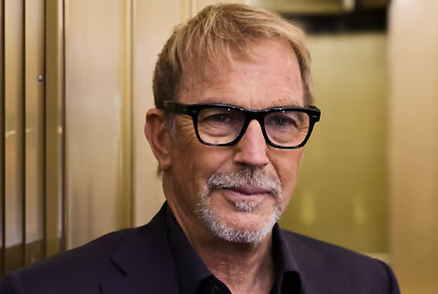
By the end of the decade, Costner had experienced the highest of highs and the lowest of lows, but his place in cinematic history was already cemented.
What would come next? The 2000s would test him again, but he would find a way to reinvent himself once more.
As Kevin Costner entered the new millennium, Hollywood was shifting. The 1990s had been dominated by his box office reign, but the 2000s presented a different landscape.
Superhero films and CGI-driven blockbusters began taking over, leaving traditional, character-driven dramas—Costner’s specialty—in a precarious position.
Despite this, Costner never stopped working. Though he was no longer the automatic box-office draw he had been in the ’90s, he continued to take on roles that resonated with him personally, balancing acting, directing, and music.
The early 2000s saw Costner in a variety of roles, though few reached the heights of his ’90s classics.
By the mid-2000s, Costner ventured into music, forming the band "Kevin Costner & Modern West".
As the decade neared its end, Costner’s box office clout had diminished, but his dedication to storytelling never wavered.
Though the 2000s weren’t Costner’s biggest decade, they set the stage for his resurgence. By the 2010s, he would return in a big way—with critically acclaimed roles, new television ventures, and a revival of his Western legacy with Yellowstone.
The 2000s proved one thing: Kevin Costner was never going away. While the industry evolved, he remained true to himself, his artistry, and his passions, ensuring that his next act would be just as compelling as the last.
As Hollywood entered the 2020s, Kevin Costner seemed to find a perfect fit for the era: television. With the rise of streaming platforms and the increasing popularity of high-quality television dramas, Costner found himself in the spotlight once again—this time on the small screen.
In 2018, Taylor Sheridan’s Yellowstone premiered on Paramount Network, with Costner playing John Dutton, the patriarch of the powerful Dutton family who owns a sprawling ranch in Montana. The show, set in the rugged, lawless landscape of the American West, became an instant hit for its intense drama, gripping storylines, and Costner’s commanding presence as the family’s leader.
Yellowstone became a major resurgence for Costner, proving that while he may not be dominating Hollywood blockbusters anymore, he was absolutely owning the TV landscape.
In addition to his leading role in Yellowstone, Costner continued to contribute to the show's expanding universe. As Yellowstone evolved, it introduced audiences to stories of the Dutton family’s past, with prequel series like 1883 and 1923.
These spin-offs became integral parts of the Yellowstone legacy, and Costner’s involvement remained a key element of the show's success. He served as an executive producer for many of these spin-offs, ensuring the continuity of the world he helped build.
As the show progressed, Costner proved that he could still captivate audiences with his acting, while also steering the show to new heights of cultural relevance and commercial success.
The 2020s also saw Costner’s continued involvement in the entertainment industry in various other capacities:
Film Roles
While television was a major focus, Costner still appeared in a few notable film projects, including:
Let Him Go (2020) – A neo-Western thriller directed by Thomas Bezucha, where Costner starred opposite Diane Lane. The film received positive reviews, particularly for Costner’s portrayal of a protective, emotionally complex father.
The Art of Racing in the Rain (2019) – Although this film premiered just before 2020, it continued to have an impact in the early 2020s. In this heartwarming family drama about a dog’s perspective on life, Costner provided the voiceover narration of the dog, Enzo, in a role that added emotional depth to the story.
Directing and Producing
Costner continued to flex his directorial muscles with projects like Horizon: An American Saga (announced in 2022), a Western epic about the founding of the American frontier. The film, which Costner both directed and starred in, was part of his return to the genre that had been a hallmark of his career.
Music
His musical career with Kevin Costner & Modern West continued to evolve, though his focus remained on acting and directing.
As Costner moved through his 60s, the challenges of balancing multiple projects began to mount. In 2023, rumors about Yellowstone’s future began to surface, with reports of Costner’s departure from the show and a potential shift in the show’s direction.
Despite this uncertainty, his influence on the show remained undeniable, and his legacy as one of the most iconic figures of modern television was solidified.
As Costner’s career continues to unfold into the 2020s, the question on everyone’s mind is: What’s next?
As the 2020s continue, Costner’s legacy is firmly cemented as one of Hollywood’s most enduring and versatile stars—a man who has survived changing trends while staying true to his roots. Whether it’s acting, directing, or music, Kevin Costner’s journey continues to inspire and captivate audiences around the world.
Kevin Costner's legacy is one of versatility, resilience, and timeless storytelling. Over the course of his decades-long career, he has left an indelible mark on film and television, creating some of the most iconic roles and stories that have continued to resonate with audiences across generations.
As he reflects on his career and looks toward the future, his lasting impact on the industry and culture is undeniable.
Costner’s roles in the 1980s and 1990s shaped him into one of Hollywood's most trusted leading men, particularly in films that celebrated the American spirit and its ideals:
Through his Western and sports roles, Costner became a modern embodiment of the American hero, blending rugged masculinity with emotional depth, all while keeping the audience invested in his personal journey.
Costner’s contributions to the Western genre were significant in reviving interest in the genre, especially with Dances with Wolves, which became a cultural touchstone. His directorial debut in the Western landscape brought an authenticity and reverence to the setting and characters that had been missing in the genre for years. The 2000s saw Costner return to the genre with films like Open Range (2003), reinforcing his position as an authority on the classic American Western and its themes of justice, land, and survival.
His involvement in the Yellowstone series (2018–present), one of the most successful television dramas in recent years, furthered this legacy, creating an entirely new audience for the Western narrative and demonstrating his continued relevance as a storyteller within the genre.
Though Costner's career has seen its share of ups and downs—especially following his peak in the 1990s—he has always bounced back with a sense of purpose and resilience.
Even when Hollywood trends shifted toward big-budget franchises and CGI-driven spectacles, Costner found a way to adapt by taking on diverse roles that reflect his interests and strengths, from musicals to independent dramas and crime thrillers.
His success in television with Yellowstone in the 2020s is proof that Costner has continued to reinvent himself and capture the public’s imagination, showing his ability to transition from film into the golden age of television.
The acclaim for his portrayal of John Dutton has brought him back into the cultural spotlight, even as he nears his 70s, solidifying his legacy in Hollywood as someone who evolves with the times while maintaining the same commitment to quality storytelling.
Beyond his on-screen presence, Costner’s personal life has also shaped his legacy. While his relationships have been well-publicized, including his long marriage to Christine Baumgartner and their three children, his commitment to family has remained a cornerstone of his personal philosophy.
His role as a father, mentor, and partner has informed much of the warmth and humanity that audiences see in his performances. Many of his roles explore fatherhood, responsibility, and the sacrifices that come with leading others, themes that have become an integral part of his persona.
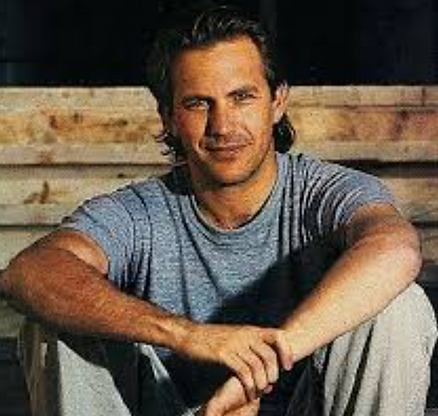
Costner has not only been a successful actor but also a director, producer, and musician. His dedication to the arts is not limited to film—he formed the band Kevin Costner & Modern West, giving him another outlet for his passion for music. His songs and performances with the band have resonated with his fans, adding another layer to his multifaceted career.
As a director, his work on Dances with Wolves and Open Range demonstrated his desire to tell stories from the heart, focusing on themes like loyalty, courage, and the human condition.
Costner’s characters—whether as the noble hero, the grizzled leader, or the vulnerable mentor—have become a part of film history, often quoted and referenced in pop culture. He’s left behind an indelible mark in the form of memorable lines, moments, and iconic roles that continue to inspire new generations of moviegoers and filmmakers alike.
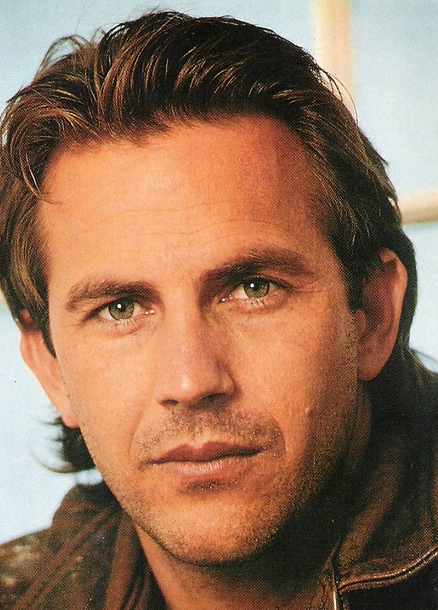
His work in films like The Bodyguard (1992) and Field of Dreams (1989) have also created cultural touchstones that go beyond just being entertainment—they’ve become part of society’s collective memory, with songs, scenes, and quotes from these films becoming instantly recognizable.
Costner’s legacy in Hollywood goes beyond just his body of work. His fearlessness in taking risks—from his decision to direct Dances with Wolves to the early financial gamble of Waterworld (1995)—has influenced filmmakers and actors who came after him.
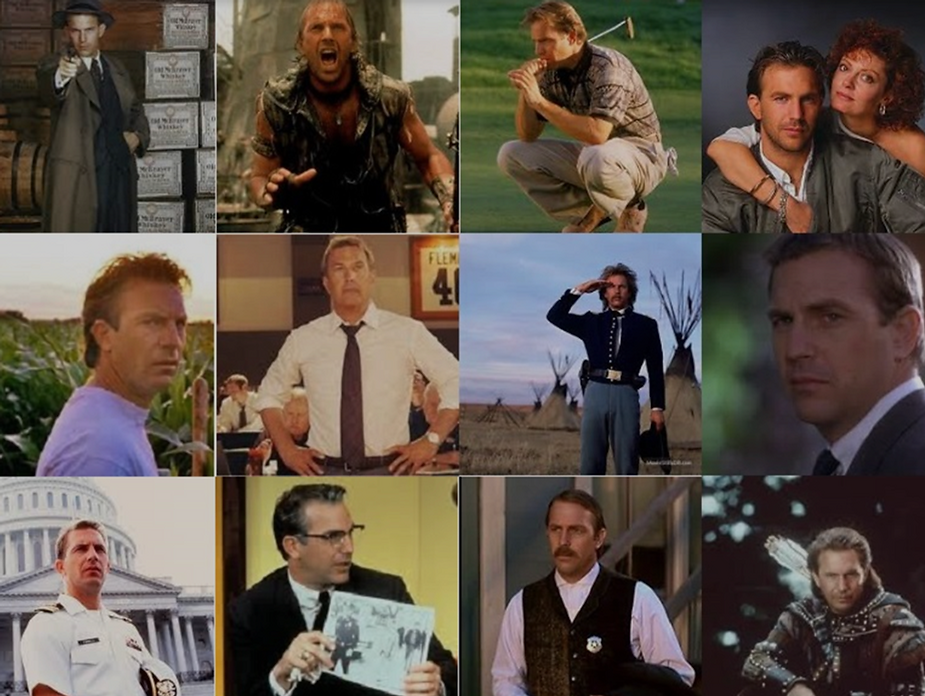
His ability to blend entertainment with social commentary and his persistence in following his own artistic vision has made him a role model for others navigating the ever-changing landscape of Hollywood.
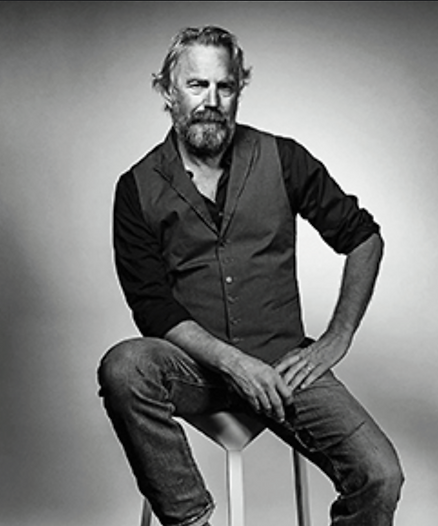
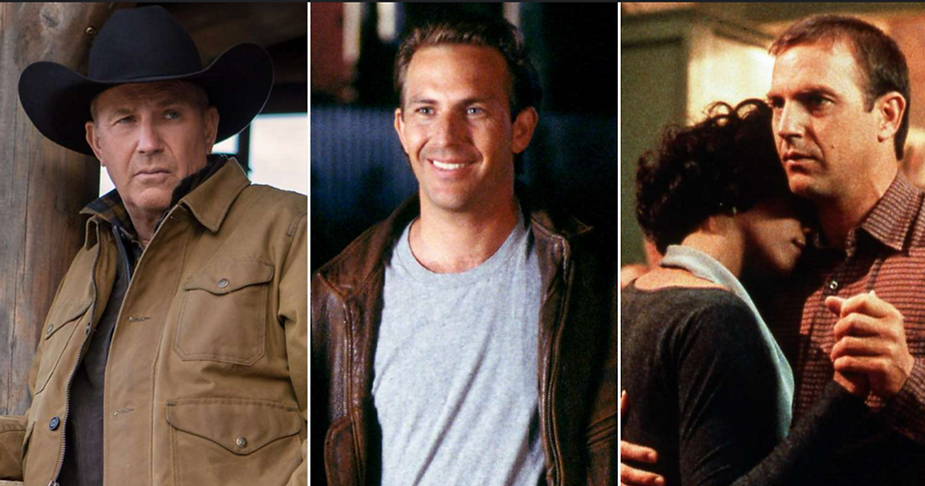
Kevin Costner’s legacy will endure because he has given audiences more than just films and TV shows—he has given them timeless stories about the human experience, rooted in honor, love, and the search for meaning. His work will continue to inspire, and his name will forever be associated with the pinnacle of storytelling.
-fotor-bg-remover-20251210165637.webp)


