-fotor-bg-remover-20251211141935.webp)
-fotor-bg-remover-20251211143525.webp)
Helen Keller's story is one of extraordinary resilience, intelligence, and compassion. Born on June 27, 1880, in Tuscumbia, Alabama, Helen Keller was a healthy child until she fell ill at 19 months old with what doctors described as "an acute congestion of the stomach and the brain," which may have been scarlet fever or meningitis. This illness left her both deaf and blind, plunging her into a world of darkness and silence.
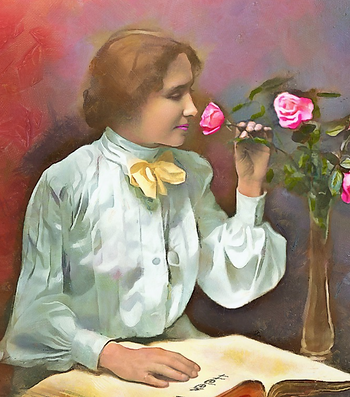
For the first few years after her illness, Helen struggled to communicate, often expressing her frustration through tantrums. Her family, desperate to help her, eventually sought the advice of Alexander Graham Bell, who recommended they contact the Perkins Institute for the Blind in Boston. It was through this connection that Anne Sullivan, a young teacher who was visually impaired herself, entered Helen's life.
"The only thing worse than being blind is having sight but no vision."
"Alone we can do so little; together we can do so much."
"Although the world is full of suffering, it is also full of the overcoming of it."
"Optimism is the faith that leads to achievement. Nothing can be done without hope and confidence."
"What we have once enjoyed we can never lose. All that we love deeply becomes a part of us."
"Character cannot be developed in ease and quiet. Only through experience of trial and suffering can the soul be strengthened, ambition inspired, and success achieved."
"Life is either a daring adventure or nothing at all."
"Keep your face to the sunshine and you cannot see a shadow."
These powerful words continue to resonate, inspiring people to embrace resilience, compassion, and the limitless potential of the human spirit.

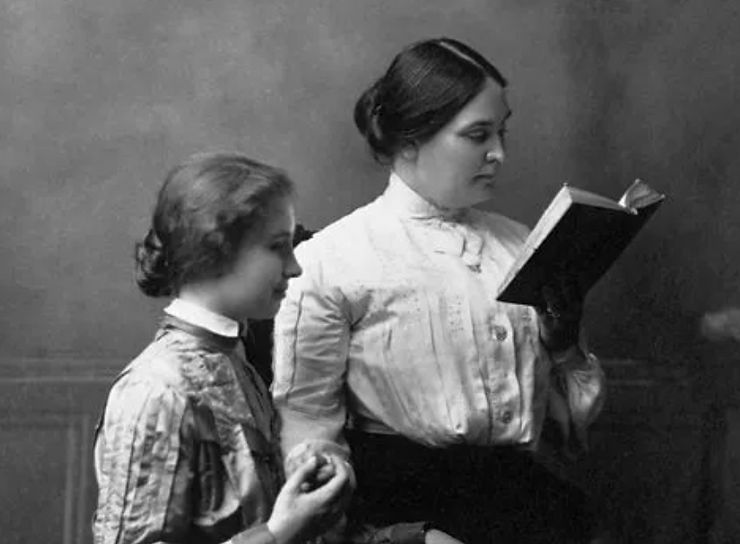
Anne Sullivan began working with Helen in 1887, and their relationship would become legendary.
Sullivan taught Helen using a method of finger-spelling into her hand, starting with simple words like "doll" and "water." The breakthrough came when Anne led Helen to a water pump and spelled "W-A-T-E-R" into her hand as the cool liquid flowed over it.
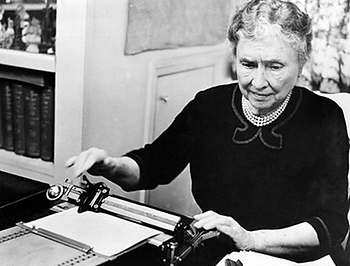
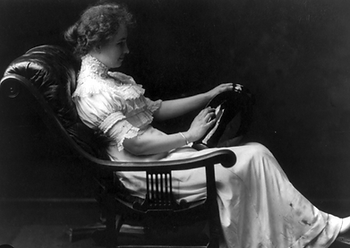
This moment of comprehension opened the world to Helen, and from that day forward, she eagerly learned language, eventually mastering reading, writing, and speaking.
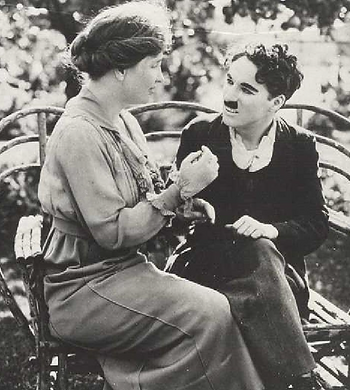
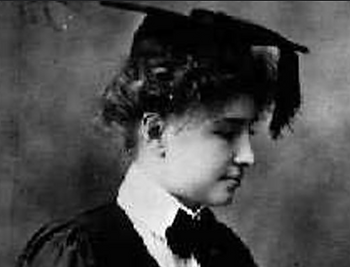
Helen Keller’s thirst for knowledge was insatiable. She went on to attend the Cambridge School for Young Ladies and later Radcliffe College, where she became the first deaf-blind person to earn a Bachelor of Arts degree in 1904.
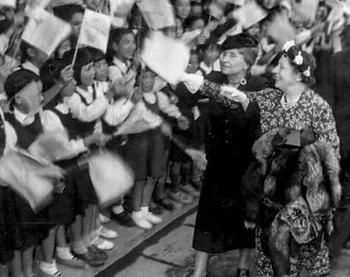
Throughout her academic journey, Anne Sullivan remained by her side, assisting her with communication and adapting materials for her needs.
Beyond her academic achievements, Helen Keller became a powerful advocate for people with disabilities. She traveled the world, gave lectures, and wrote extensively about her experiences and beliefs. She was a staunch supporter of social justice causes, including women's suffrage, workers' rights, and pacifism.
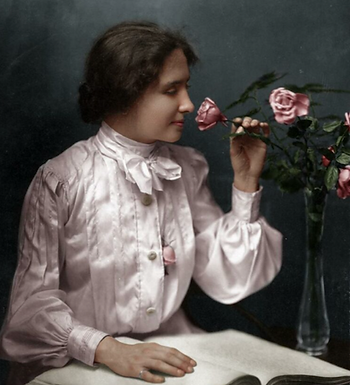
Helen also forged friendships with some of the most influential figures of her time, including Mark Twain, who admired her wit and tenacity.
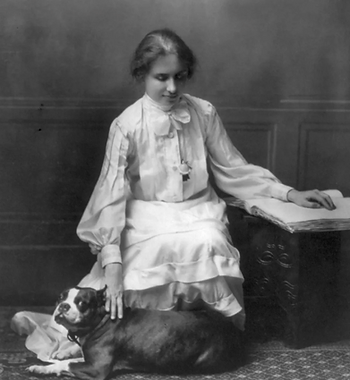
She published numerous books and essays, with "The Story of My Life" (1903) becoming a classic of American literature, inspiring generations with its message of perseverance and the transformative power of education.
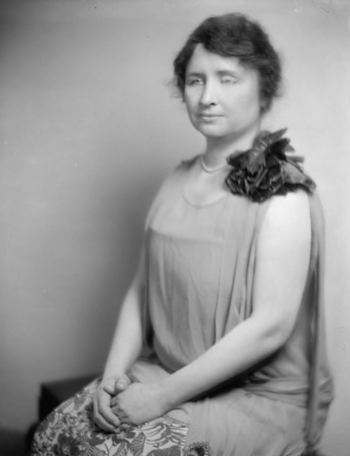
Keller's work extended far beyond her personal narrative. She was a co-founder of the American Civil Liberties Union (ACLU) and actively supported the American Foundation for the Blind, helping to improve education and employment opportunities for blind and visually impaired people.
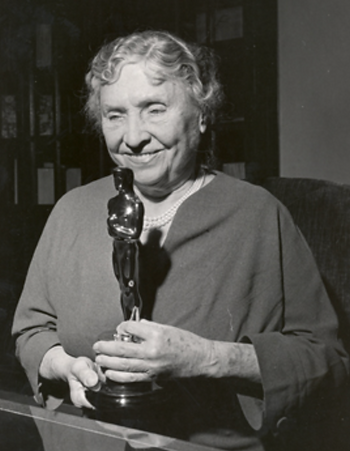
Helen Keller passed away on June 1, 1968, at the age of 87. Her legacy endures, reminding the world that physical limitations do not define a person's potential. Her life—marked by courage, empathy, and a relentless pursuit of knowledge—forever changed the way society views and supports people with disabilities, proving that with determination and support, extraordinary achievements are possible.
Helen Keller's journey from isolation to worldwide influence is a testament to the human spirit's ability to overcome and inspire. Her story continues to teach us about compassion, inclusion, and the boundless potential of the human mind and heart.
Before Helen Keller's extraordinary life, the world had a much more limited understanding of the potential of people with disabilities.
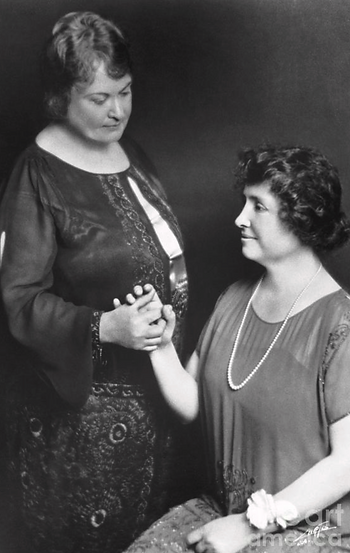
In the late 19th and early 20th centuries, those who were deaf, blind, or differently abled often faced isolation, stigma, and a lack of educational and professional opportunities. Society largely viewed these individuals as incapable of independent thought or meaningful contribution, and few resources were dedicated to their development or inclusion.
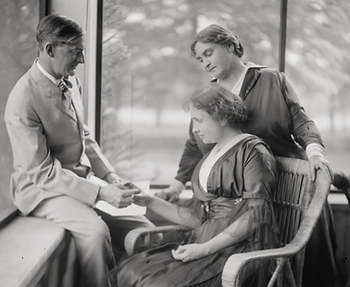
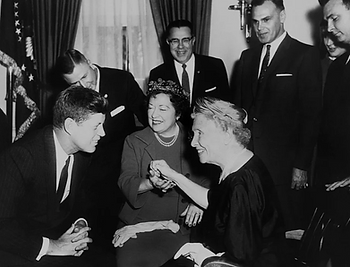
Helen Keller’s journey to India in 1955 was a remarkable and deeply inspiring chapter in her life! Let’s dive into the details.
🌟 The Context of Her Visit:Helen Keller, the world-famous deaf-blind activist, author, and humanitarian, visited India from November 18 to December 23, 1955, at the age of 75.
Her trip was part of her global mission to advocate for the rights of people with disabilities and promote education and rehabilitation for the blind and deaf.
🛫 Why She Went to India:Keller’s visit was sponsored by the American Foundation for the Overseas Blind (now Helen Keller International). After traveling extensively across Europe, the Middle East, and Asia, Keller turned her attention to India, recognizing the country's massive population of blind and disabled individuals living in poverty.
She was determined to encourage more governmental and societal support for people with disabilities, and to inspire hope and self-reliance among them.
🇮🇳 Her Time in India:During her six-week stay, Keller toured across the country, visiting cities like Bombay (now Mumbai), Delhi, Calcutta (now Kolkata), Madras (now Chennai), and Bangalore.
👉 In Delhi:
In Bombay and Calcutta:
👉 In Madras and Bangalore:
✨ The Impact:
🌺
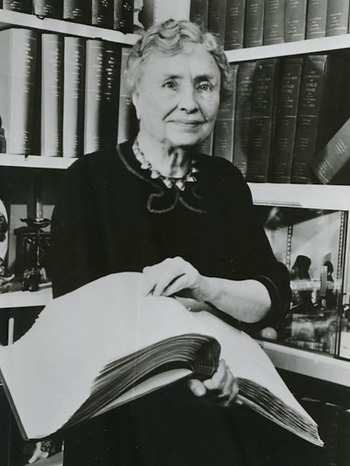
💭 Philosophical Significance:Keller’s time in India reflected her lifelong belief in the unity of humanity and the triumph of the human spirit over adversity.
Her deep empathy, spiritual perspective, and resilience resonated with Indian cultural values, making her visit not just a diplomatic tour but a heartfelt exchange of wisdom and compassion.
Would you like to explore some of her speeches from this journey or how India remembers her visit today? I’d be happy to dig deeper!
Helen Keller wrote a remarkable collection of books and essays that captured her journey, insights, and advocacy for people with disabilities.
🌿 The Story of My Life (1903)✅ Overview:
Keller’s most famous work, written at the age of 22, tells the incredible story of her early life, her struggles with deafness and blindness, and her education with her teacher Anne Sullivan.
It traces her journey from isolation to intellectual and social awakening.
✨ Key Highlights:
⭐ Impact:
🌺 Optimism: An Essay (1903)✅ Overview:
A philosophical reflection on the nature of optimism, which Keller believed was not dependent on external circumstances but an inner force.
She argues that despite her physical limitations, optimism was her driving force.
✨ Key Highlights:
⭐ Impact:
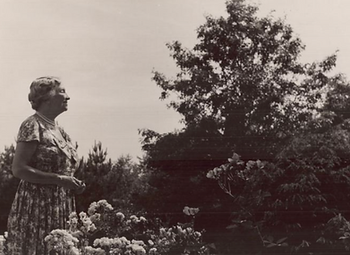
🌈 My Religion (1927) (Later republished as Light in My Darkness)✅ Overview:
✨ Key Highlights:
⭐ Impact:
🌏 Midstream: My Later Life (1929)✅ Overview:
✨ Key Highlights:
⭐ Impact:
🌻 Let Us Have Faith (1940)✅ Overview:
✨ Key Highlights:
⭐ Impact:
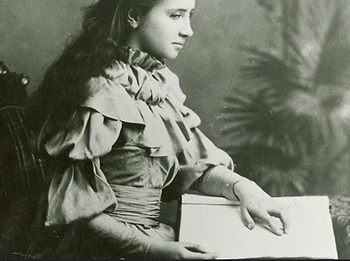
✨ Teacher: Anne Sullivan Macy (1955)✅ Overview:
✨ Key Highlights:
⭐ Impact:
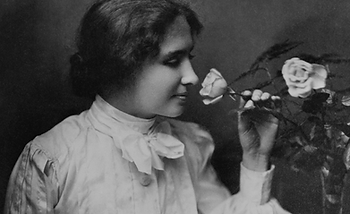
🌿 The Open Door (1957)✅ Overview:
✨ Key Highlights:
⭐ Impact:
A beautiful summation of Keller’s wisdom, optimism, and enduring faith in human potential.
.
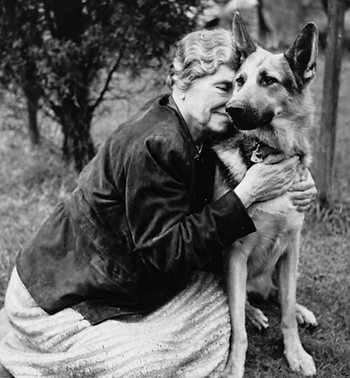
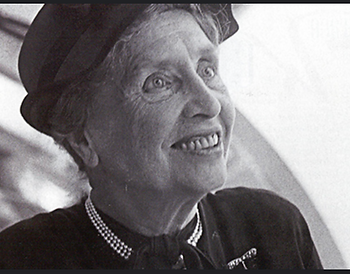
✨ Helen Keller’s literary legacy is not just a story of overcoming disability; it’s a testament to intellectual curiosity, social justice, and the belief that even the most daunting obstacles can be transformed into opportunities for growth and service.
Would you like to explore the impact of her writings on disability rights movements or dive into the philosophical undercurrents in her works? Let me know what resonates with you! 🌻

-fotor-bg-remover-20251210165637.webp)


